


Wastewater Decontamination module
Biohazardous wastewater is generated in medical, veterinary, and research institutions when working with pathogenic microorganisms. Discharging such waste into sewage systems without preliminary decontamination creates severe epidemiological risks and violates sanitary-hygienic norms. Thermal decontamination units provide complete sterilization of infected effluents in accordance with Russian and international legislation.
The Problem of Biohazardous Wastewater Management
Biohazardous wastewater consists of liquid waste containing pathogenic microorganisms, their toxins, or genetically modified materials. These effluents result from washing laboratory glassware, processing biological samples, disinfecting rooms and equipment, and conducting diagnostic or research procedures.
The primary risks associated with untreated biohazardous effluents include the spread of infectious diseases through water systems, environmental contamination with resistant microbial strains, and the creation of epidemiological danger zones. Discharging these effluents without treatment entails administrative and criminal liability under environmental and sanitary-epidemiological laws.
Areas of Application
Thermal wastewater decontamination units are utilized in institutions where biohazardous liquid waste is generated:
-
Veterinary Institutions and Vivariums: For treating effluents from laboratory animal housing, cage washing, and biological fluid disposal.
-
Infectious Disease Hospitals and Isolation Wards: For decontaminating waste from patients with highly dangerous infections and water used in ward disinfection.
-
BSL-2, BSL-3, and BSL-4 Laboratories: For the sterilization of effluents resulting from work with pathogenic cultures, viruses, and bacteria.
-
Vaccine and Biopreparation Production: For treating technological effluents containing live or inactivated microorganisms.
-
Research Centers: For decontaminating waste from experiments involving GMOs and biologically active substances.
Technological Solution
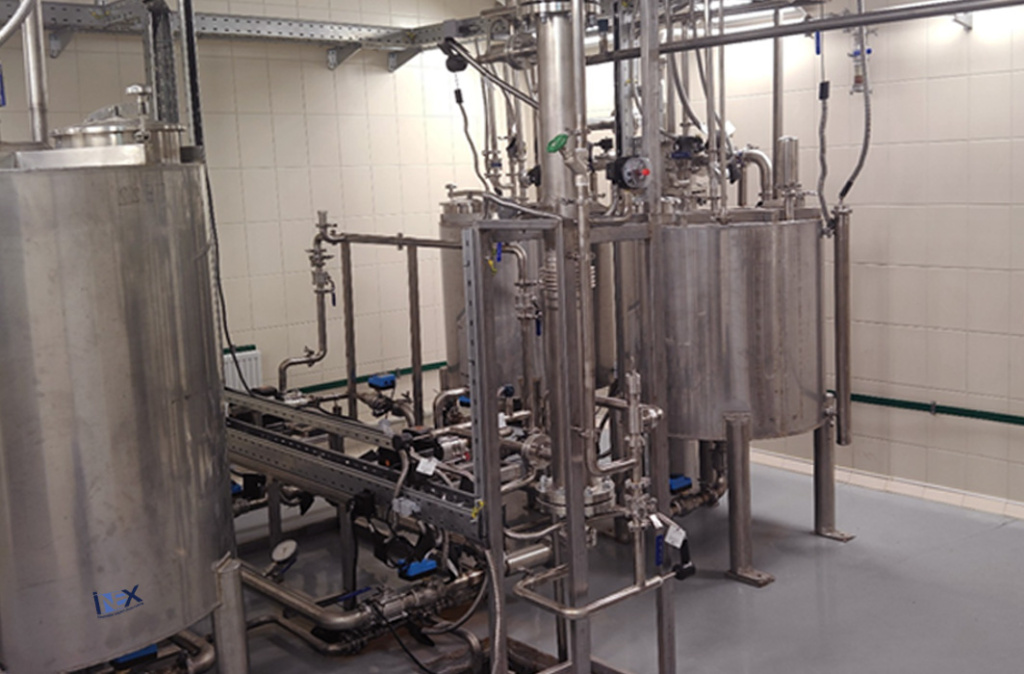
Thermal decontamination units are fully automated systems that operate without personnel contact with the treated effluents. The hermetic design eliminates the possibility of environmental contamination at all stages of the process.
The technological cycle includes consecutive stages: accumulation of infected effluents in a hermetic tank, grinding of organic inclusions to ensure uniform treatment, sterilization at 143°C under a pressure of 0.6 MPa for at least 8 minutes, controlled cooling, and discharge of sterilized water into the sewer.
The self-diagnostic system monitors all process parameters with visualization on the operator's monitor. Equipment redundancy is provided by two parallel processing lines, guaranteeing continuous operation during maintenance. Compact construction allows the unit to be integrated into existing drainage systems with minimal construction work.
Design and Operating Principle
The unit's body is manufactured from stainless steel with a corrosion-resistant coating resilient to aggressive disinfectants. All internal surfaces feature a smooth finish to prevent contaminant buildup and facilitate sanitation.
-
Grinding System: Includes a high-speed disperser to break down organic inclusions up to 5 mm, ensuring even temperature distribution during sterilization.
-
Exhaust System: Features HEPA filtration (99.97% efficiency for 0.2 μm particles) to prevent the release of contaminated air into the facility.
-
Thermal Insulation: Reduces energy consumption and prevents the heating of surrounding surfaces.
-
Control System: An automated programmable logic controller (PLC) records all process data and manages an emergency alarm system that transitions the unit to a safe mode during malfunctions.
Regulatory Requirements and Compliance
Thermal decontamination units comply with the following sanitary and technical standards:
-
SanPiN 3.3686-21, App. 2, Para. 26: Establishes mandatory parameters for thermal treatment: ≥143°C, ≥0.6 MPa, and ≥8 minutes of exposure.
-
GOST 12.1.007-76: Classification of harmful substances and safety requirements for biological agents.
-
GOST R 52539-2006: Technical specifications for the disposal of medical and biological waste in controlled environments.
-
ISO 17665-1:2024: International standard for the development and validation of moist heat sterilization processes.
Key Advantages of the Technology
-
Guaranteed Sterilization: Destruction of all pathogens, including spores and prions, through strictly controlled temperature-time parameters.
-
Personnel Safety: A fully hermetic system with remote monitoring eliminates occupational infection risks.
-
High Reliability: Dual-line redundancy and industrial-grade components ensure the system remains operational 24/7.
-
Building Integration: Automated cycles can be integrated into the central Building Management System (BMS) for comprehensive facility oversight.