


Centrifuges
Industrial centrifuges are mechanical devices designed to separate heterogeneous liquid and solid media under the influence of centrifugal force. This equipment is utilized for the separation of suspensions and emulsions, purification of industrial wastewater, and the isolation of solid particles and liquid fractions of varying densities. Centrifuges are essential in the chemical, petrochemical, food, and pharmaceutical industries, as well as in medical institutions, biotechnological facilities, and wastewater treatment plants.
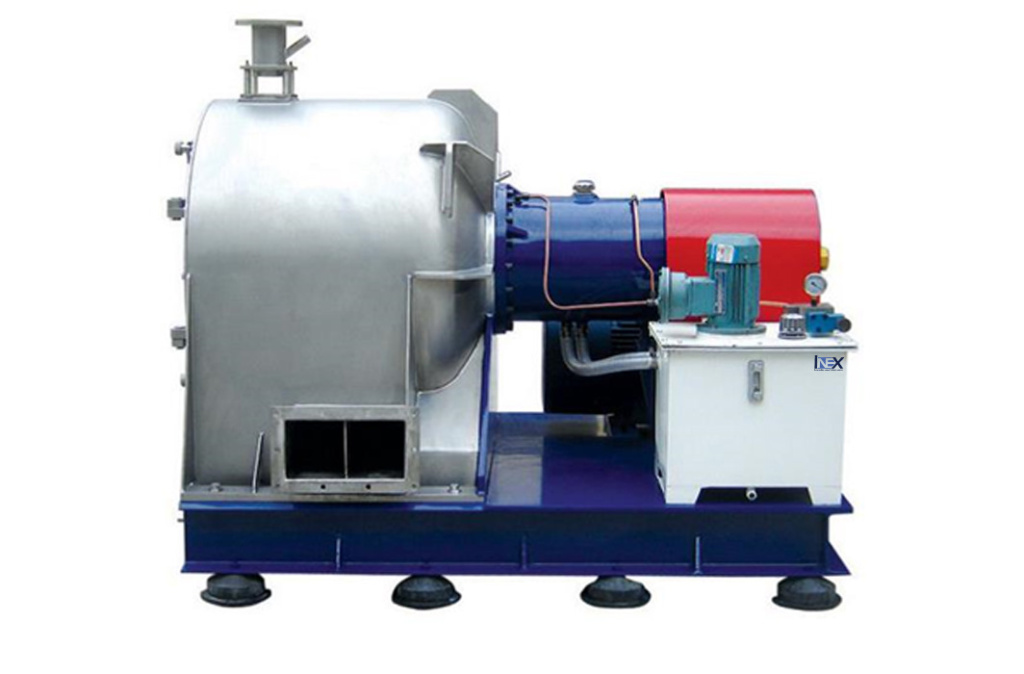
Types of Centrifuges
The classification of industrial centrifuges is based on their operating principle and the structural design of the work cycle:
-
Continuous Centrifuges: These systems provide a constant supply of raw material and the continuous removal of separated fractions. This category includes models with self-discharging drums and automated loading systems.
-
Batch Centrifuges: Operates on a cyclic principle, requiring stops for loading and unloading. These are typically represented by drum, disc-stack, and basket designs.
-
Analytical and Laboratory Models: Specialized benchtop units designed for analytical tasks and small-scale production volumes.
Technical Characteristics and Construction
Primary technical parameters determine the operational capabilities of centrifugal equipment. Maximum rotation speeds range from 3,000 to 15,000 rpm, generating a centrifugal load of up to 8,000 g.
-
Capacity: Working drum volumes vary from 50 liters to 2,000 liters depending on the application.
-
Materials: Drums are manufactured from high-grade stainless steel with anti-corrosion coatings to ensure durability in aggressive environments.
-
Stability: The design ensures dynamic balancing and the hermetic sealing of working chambers. Vibration stability and acoustic performance comply with GOST 31836-2012 and GOST 12.1.012-90.
-
Specialized Models: Hermetically sealed units are available for working pressures up to 0.6 MPa and temperatures up to 150°C. The drive system includes protected control panels and programmable logic controllers (PLC).
Areas of Application
The functional purpose of centrifugal equipment covers a wide range of industrial processes:
-
Environmental Protection: Purification of technical and industrial wastewater from suspended solids, oils, and other pollutants.
-
Food Industry: Separation of dairy products, juices, and vegetable oils.
-
Medical and Biotechnology: Separation of biological materials, blood plasma, and cell cultures.
-
Pharmaceutical Manufacturing: Purification of substances and finished dosage forms, including operations within high-containment BSL (Biosafety Level) zones.
Regulatory Compliance
The design and operation of centrifugal equipment are regulated by current technical standards:
-
GOST 31836-2012: Safety requirements and test methods for industrial centrifuges.
-
GOST 28705-90: Technical requirements for design and performance characteristics.
-
GOST 12.1.003-2014 & GOST 12.1.012-90: Occupational safety standards regarding noise and vibration.
-
GOST 12.1.010-76: Explosion safety requirements.
Safety and Validation
Safety systems in modern centrifuges include protection against dynamic imbalance, mechanical overloads, and emergency stops triggered by parameter deviations.
Automated monitoring systems with alarms provide real-time control over vibration, temperature, and hermetic integrity. Equipment validation is conducted according to IQ/OQ/PQ protocols, with full documentation of all qualification stages. Control systems allow for the logging of operating modes, emergency situations, and technological parameters, with seamless integration into SCADA/MES systems for remote process management.