


Drying equipment
Drying equipment consists of technological units designed to remove moisture from raw materials, semi-finished products, and finished goods through thermal, vacuum, infrared, sublimation, or convective action. These devices are used at various stages of production, from the preparation of excipients to pre-finish processing, including operation in controlled clean zones according to GMP standards. The primary fields of application include pharmaceuticals, the food industry, biotechnology, and chemical manufacturing.
The choice of a drying unit is determined by the physicochemical properties of the product, final form quality requirements, and environmental conditions.
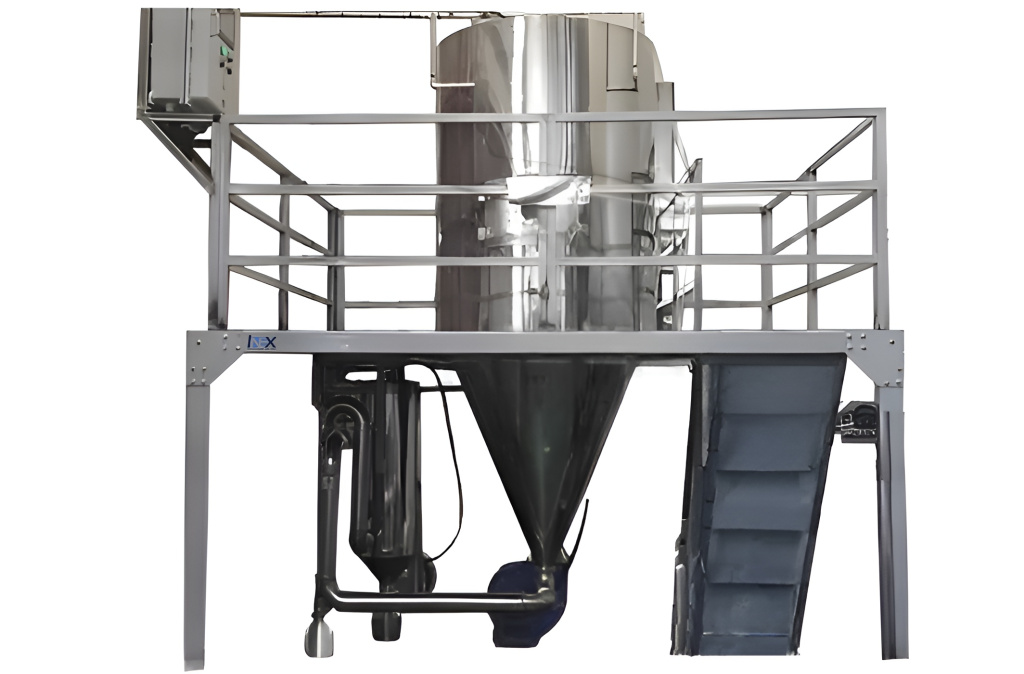
Types of Drying Equipment
Drying equipment is classified by its operating principle and specific technological tasks:
-
Drying Ovens: Universal units, including vacuum models designed for thermolabile substances at reduced temperatures and low pressure.
-
Lyophilizers (Freeze Dryers): Perform drying by sublimation of moisture under deep vacuum and sub-zero temperatures. Essential for stabilizing biological drugs and vaccines.
-
Convective Dryers: Use forced circulation of heated air to distribute heat evenly across the product.
-
Infrared Dryers: Provide rapid surface heating via infrared radiation.
-
Fluid Bed Dryers: Highly efficient for drying granulates and bulk substances. They ensure uniform heating and high productivity by suspending particles in a "fluidized" state.
-
Spray Dryers: Used for drying solutions and emulsions into powdered substances. A key element in producing API powders and food ingredients.
-
Cleanroom Drying Chambers: Specifically designed for operation in controlled environments (Classes A/B/C/D), ensuring aseptic process compliance.
Design Features and Parameters
The construction of INEX drying equipment accounts for sanitary safety, energy efficiency, and technological compatibility:
-
Materials: AISI 316L or AISI 304 stainless steel with internal surfaces polished to Ra ≤ 0.4 μm.
-
Seals: Made from FDA-certified materials suitable for contact with medicinal products and food.
-
Safety: Equipment used with flammable liquids (LFL) is manufactured in an explosion-proof (Ex) configuration.
-
Sanitization: Designs support automated CIP/SIP (Cleaning/Sterilization in Place) procedures.
-
Control Systems: Integration with PLC/SCADA, featuring sensors for temperature, humidity, and pressure, as well as data archiving capabilities.
Application of Drying Equipment
Functional applications span across multiple stages of pharmaceutical and biotechnological production:
-
Granulate Drying: A critical stage in solid dosage form manufacturing (tablets, capsules) following wet granulation.
-
Excipient Preparation: Drying materials such as microcrystalline cellulose, lactose, and starch.
-
Sterile Drying of Vials and Ampoules: A combined process in drying chambers that includes drying, sterilization, and depyrogenation before aseptic filling.
-
Lyophilization of Biologics: An aseptic method ensuring the stability of protein structures and long-term shelf life for vaccines.
-
API Drying: The final stage after crystallization or extraction to obtain a stable, dosable medicinal form.
Regulatory Compliance
Drying equipment used in high-tech industries must comply with the following standards:
-
GOST R ISO 13408-3–2010: Requirements for lyophilization in aseptic conditions.
-
ISO 14644-1 & 14644-4: Cleanroom classification and design.
-
GMP (Good Manufacturing Practice): Mandatory pharmaceutical manufacturing requirements.
-
21 CFR Part 210/211: FDA standards for drug manufacturing.
-
SanPiN 1.2.3685-21: Hygiene and microbiological criteria.
Control, Validation, and Safety
Modern drying units provide high levels of automation and integration:
-
Data Integrity: Archiving of critical parameters (temperature, time, vacuum) for validation reports.
-
Qualification: Support for IQ/OQ/PQ protocols to document equipment performance.
-
Safety Systems: Protection against overheating, overpressure, and emergency shutdowns with visual/audible alarms.
-
Electronic Logs: Maintenance of digital records to meet GMP and FDA audit requirements.